News
-

Extruder Barrel Bore Repair: How to Assess Wear and Choose a Cladding Process
Extruder Barrel Bore Repair: How to Assess Wear and Choose a Cladding Process A worn bore does not automatically mean a barrel must be replaced. The right decision depends on the damage, barrel construction, remaining wall thickness, screw-to-barrel clearance ...Read more -

Shanghai Duomu Industry Holds 2026 Mid-Autumn Team-Building Event in Anji
Shanghai Duomu Industry Holds 2026 Mid-Autumn Team-Building Event in Anji As part of its 2026 Mid-Autumn Festival celebrations, Shanghai Duomu Industry Co., Ltd. brought employees together for a two-day, one-night trip to Anji, Zheji...Read more -

Air Compressor Rotor Repair: When Laser Cladding Is a Practical Option
Air Compressor Rotor Repair: When Laser Cladding Is a Practical Option When an air compressor rotor is worn, the first question is not which welding process to use. It is whether the damaged rotor can be restored without compromising...Read more -

Hydraulic Rod Cladding Machine: How to Specify One for Cylinder Rods
Hydraulic Rod Cladding Machine: How to Specify One for Cylinder Rods A hydraulic rod cladding machine should be specified from the rod and the finished condition it has to reach, not from a machine video or a nominal power rating. Fo...Read more -

Laser Cladding vs Hard Chrome Plating for Hydraulic Cylinders and Rods
Laser Cladding vs Hard Chrome Plating for Hydraulic Cylinders and Rods Scored rods, corroded bores and worn cylinder walls are among the most common causes of unplanned downtime in hydraulic systems. For decades the default answer ha...Read more -

PTA Welding Machine Specifications Explained: What Each Parameter Means and Why It Matters
Specification sheets are where the truth about a PTA welding machine lives — but only if you know how to read them. Two machines can carry the same “PTA welding machine” label and still be completely different tools: one built for precision val...Read more -

How to Repair a Worn Shaft Without Replacing It: An Engineering Decision Guide
How to Repair a Worn Shaft Without Replacing It Quick answer: A worn shaft does not automatically need to be replaced. When the remaining substrate is structurally sound and the damage is primarily surface-related, the worn zone can be rebuilt by laser claddin...Read more -

How Much Material Should Be Added When Rebuilding a Worn Component?
worn industrial component doesn't always need to be replaced. If the remaining substrate is structurally sound, the damaged area can often be rebuilt by welding buildup, PTA hardfacing, or laser cladding, then machined back to the required dime...Read more -

PDC Drill Bit Laser Cladding: Repair, Gauge & Cutter Protection
Author: Shanghai Duomu Industry Co., Ltd — Technical Content Team Quick answer: PDC drill bit laser cladding is a controlled surface-repair process used to restore worn gauge pads, blade areas, and other wear zones on PDC bit bodies. A...Read more -

What Is Cladding in a Ball Valve? A Practical Guide to CRA Weld Overlay
Cladding in a ball valve means applying a corrosion-resistant or wear-resistant metallic layer to the valve's sealing and flow-contact surfaces — primarily the ball, seat, and sometimes the stem and body bore. In most industrial ball valves, th...Read more -

PTA Hardfacing vs. Laser Cladding: How Engineers Select the Right Surface Engineering Process
Selecting the Right Process Starts With the Component—Not the Equipment Choosing between PTA hardfacing and laser cladding is not simply a comparison of which technology is more advanced. In industrial surface engineering, the most app...Read more -
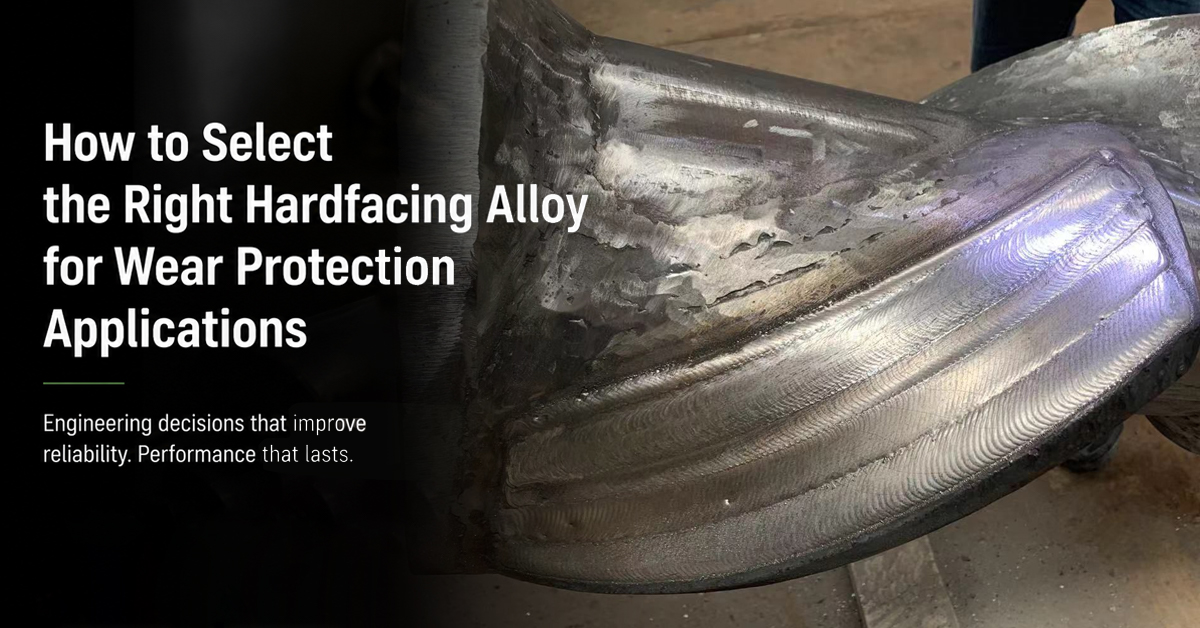
How to Select the Right Hardfacing Alloy for Wear Protection Applications: An Engineering Decision Guide
Hardfacing Alloy Selection Should Begin With Failure Analysis Selecting a hardfacing alloy is not a material comparison exercise. In practical wear applications, the most expensive mistakes usually occur before welding begins — when the failure...Read more


